
Surrender as Strength: Healing After Cancer And Letting Go
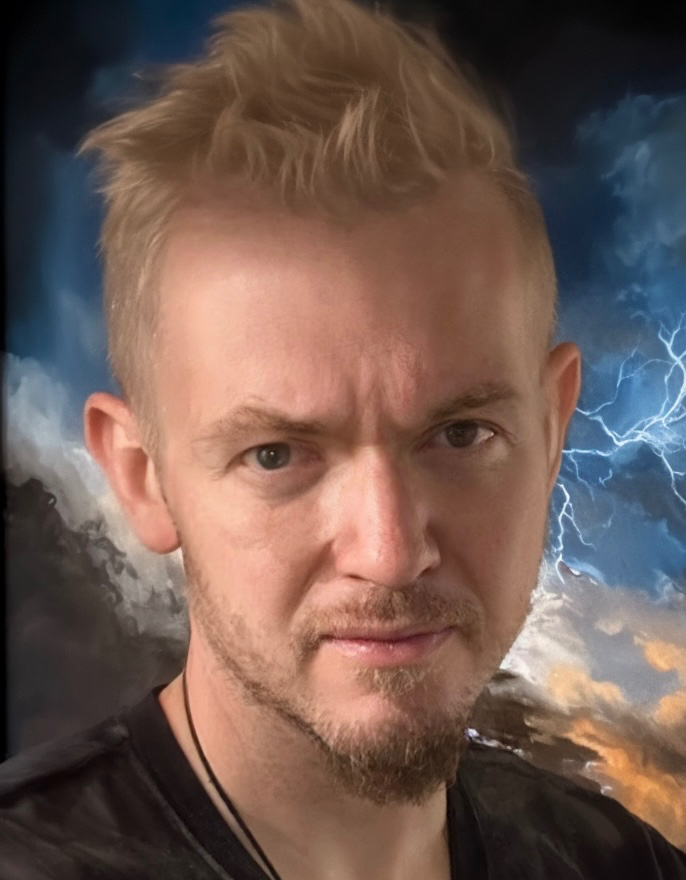
When the Only Path Forward Is the One You Cannot Control

The symptom that ultimately revealed my cancer diagnosis was strangely symbolic of something I had struggled with all my life: difficulty swallowing.
Not food alone, but reality itself.
Why did it feel like I had to work disproportionately harder than others simply to arrive at the same milestones? Why had life seemed filled with challenge after challenge, setback after setback, while I watched peers move naturally through the things I quietly coveted: graduation, marriage, children, stability, peace? There was a terrible irony in realizing that just as I had finally fought my way toward many of those things, a rare cancer had been quietly growing inside me.
Long before the diagnosis, my relationship with what we call God had already begun to evolve. I grew up within Protestant Christianity, where the Protestant work ethic was often treated almost like sacred law. Discipline, productivity, self-denial, and perseverance, these things were not merely encouraged but moralized. Hard work was seen as evidence of character, and outcomes were often interpreted as reflections of worth.
I struggled deeply within that framework.
My upbringing looked nothing like the idealized life I often saw celebrated around me. My father died when I was very young. We lived in poverty. I was neurodivergent and spent much of my life masking parts of myself simply to function socially. Rather than feeling spiritually understood, I often felt spiritually defective.
In order to make sense of the chaos, I became increasingly drawn toward stillness, meditation, and philosophies outside the world I was raised in. During that period, a passage from the Bhagavad Gita struck a deep chord within me:
“You have a right to perform your prescribed duties, but you are not entitled to the fruits of your actions.”
~ Bhagavad Gita, Chapter 2, Verse 47
I had spent most of my life believing effort existed primarily to control outcome. If I worked hard enough, disciplined myself enough, endured enough suffering, then eventually life would reward me proportionally. That belief is deeply embedded in modern culture. It is often called the Horatio Alger myth: the assumption that relentless effort inevitably manifests success.
I lived according to that philosophy for years, and it nearly destroyed me.
I worked obsessively. I pushed myself beyond sustainable limits. When I failed, I interpreted it as personal inadequacy rather than overload. Eventually, the exhaustion and shame contributed to a gambling addiction that drove me toward near homelessness and suicidal ideation. Looking back now, I realize gambling appealed to me not simply because of money, but because it offered the illusion that probability itself could finally be controlled.
If I could just calculate correctly enough, sacrifice enough, endure enough, maybe I could finally bend reality in my favor.
Still, despite the chaos, I slowly managed to rebuild. I re-enrolled in school, completed nursing school full-time, became a registered nurse, improved my finances, entered graduate school, and eventually proposed to the woman I love. For the first time in my life, stability no longer felt entirely imaginary.
And then I was diagnosed with esophageal cancer at 36.
After the diagnosis, I did what many frightened people do: I searched obsessively for certainty. I researched prevalence rates, surgical outcomes, survival statistics, support groups, and recovery stories. Ironically, the particular location and form of my cancer was so rare that even the available evidence felt fragmented and incomplete.
Online support quickly became a double-edged sword.
I encountered stories from people who had spent weeks on ventilators, developed severe postoperative complications, lost the ability to eat normally, or been forced to abandon careers and independence entirely. Some discussions felt less like preparation and more like prophecy.
For someone who had spent his entire life trying to outmaneuver uncertainty, this was psychologically devastating.
Because eventually I realized something unavoidable: my survival depended on surrendering to the blade.
Surgery was my only real path toward recovery. Without it, the tumor would eventually prevent me from eating entirely. In fact, my surgeon later admitted he did not fully understand how I had still been able to swallow before the operation.
What terrified me most was not merely the surgery itself, but the loss of control it represented.
All my life, I had believed effort existed to secure an outcome. So what happens when the outcome can no longer be controlled? What is the purpose of discipline when there are no guarantees attached to it?
That was the paradox I could no longer avoid.
Slowly, my understanding began to shift. Instead of trying to force life into submission, I became willing to do whatever was within my power while releasing my obsession with certainty. I would prepare myself physically. I would trust my medical team. I would endure recovery. I would fight for the best possible outcome.
But I could not dominate reality itself.
In many ways, that realization brought me closer to the sacred than anything else in my life ever had. Not because it gave me certainty, but because it stripped away the illusion that I ever truly possessed it to begin with.
The first night after surgery felt like something from a horror film. I awoke intubated, restrained by tubes and lines, barely conscious yet unable to communicate. For hours, pain and confusion blended together while ventilator alarms echoed beside me. As a nurse, I understood enough about critical care to know exactly how vulnerable I was in that moment.
I remember thinking I looked less like myself and more like Darth Vader.
Then came the recovery. Months without real food. Tube feedings. Liquids. Relearning how to eat. Relearning how to trust my body. Existing at a pace so slow it felt almost foreign to me. There were days when showering felt like an accomplishment. Days when walking a hallway required effort. Days when I wondered if life would ever feel normal again.
And yet, strangely enough, it was there, in physical weakness rather than strength -- that something inside me finally softened.
The recovery process forced me to confront a distinction I had never fully understood before: surrender is not resignation. It is acceptance. Resignation says this is hopeless. Acceptance says this is reality, and I will meet it honestly.
There were certainly moments when I wanted to resign. Moments where exhaustion, fear, and pain made continuing feel unbearable. But the deeper I reflected, the more I realized I was no longer simply battling cancer.
I was battling my lifelong addiction to control.
Who was I trying to prove myself to? The strangers online who predicted permanent disability? The culture that equated productivity with value? The frightened younger version of myself who believed achievement was the only thing that could justify his existence?
For most of my life, I had treated survival itself like a performance review.
The months and years after surgery forced me to confront many shadows that existed long before cancer entered my body. ICU-induced PTSD surfaced alongside older wounds I had spent years suppressing. My tendency toward people pleasing intensified. Masking my neurodivergent nature became increasingly exhausting. I began to realize how much of my identity had been built around managing others' perceptions rather than listening to my own inner truth.
During shadow work and meditation, I revisited childhood memories in which my perception of reality was repeatedly overridden by authority figures. Somewhere along the way, I learned that keeping peace often mattered more than authenticity.
Cancer made that arrangement impossible to maintain.
Eventually, I left a nursing position that no longer aligned with who I was becoming. Not because I could not adapt physically after surgery, I did adapt, but because I could no longer tolerate environments that required me to betray myself psychologically.
And something unexpected happened afterward. Creative energy returned. Not all at once, but gradually. Quietly. The writing that would eventually become Blades of Resurrection began to emerge with increasing clarity. For the first time in my life, I felt less interested in performing acceptably and more interested in becoming honest.
I did not write that book because I believed it would make me wealthy. I wrote it because I genuinely believe people are starving for authenticity in a world increasingly built around performance. More personally, I think I needed to stop swallowing my own voice.
And perhaps that is the deepest transformation cancer gave me: the gradual understanding that life cannot be mastered through force alone.
Today, I still work hard. I still prepare carefully. I still pursue goals with seriousness and discipline. But internally, I have come to a different philosophy.
I do my best not to obsess over the outcomes.
One of the most transformative lessons I absorbed from the Bhagavad Gita was the idea of offering sincere effort while releasing attachment to outcome. While I do not subscribe exclusively to any single religious philosophy, nor believe any one tradition possesses a monopoly on truth, that teaching has become an essential framework for how I navigate uncertainty, suffering, and the moments in life where the odds seem impossibly stacked against me.
I am learning to participate fully without trying to dominate reality itself. To offer effort without demanding guarantees in return. To move through uncertainty with honesty rather than force.
And ironically, surrendering the illusion of control has worked far better for my peace of mind than desperately clinging to it ever did.
The path through is rarely the one you planned. Walk it anyway.
— Michael Grayson

Comments